Every engagement starts the same way: an NDA, then two days inside your business. Not a workshop. Not a questionnaire. A 1-hour intake, a 2-hour Q&A with your key people, and an honest read of what’s actually happening.
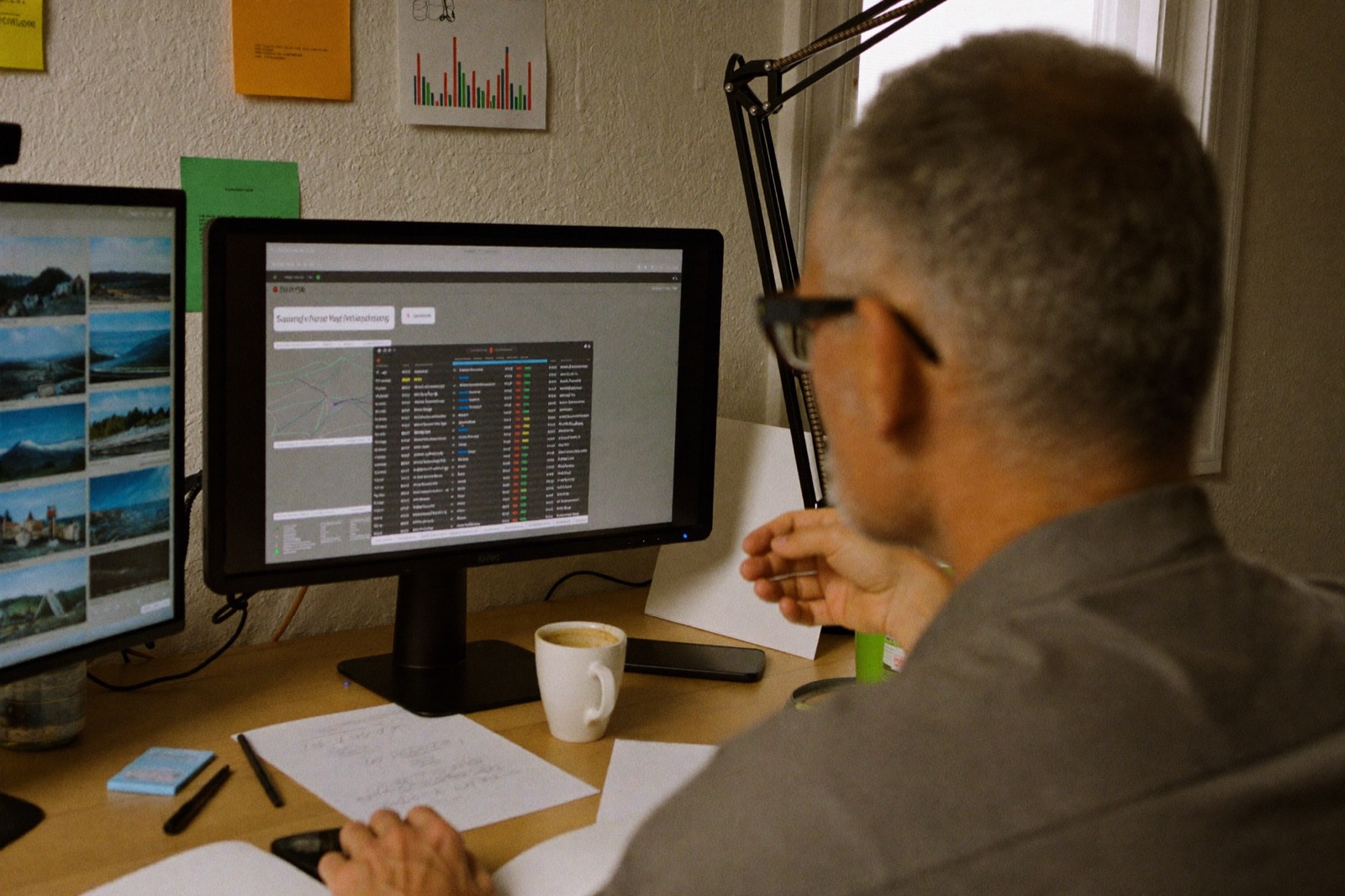
Here’s what we look at in those two days — and what we deliberately ignore.
What we look at
- Where the hours go. Not the org chart — the calendar. Who spends time producing, who spends time coordinating, and how much of the week disappears into alignment meetings about work nobody has started.
- The handover count. Every task that crosses a desk loses a day. A landing page that touches five people ships in three weeks. The same page, owned by one operator with the right tools, ships in two days.
- What the agency actually delivers. We read the last three months of agency output against the invoices. Usually the strategy deck is beautiful and the shipped work is thin.
- Tool sprawl and licence waste. Most teams pay for four tools that do the same thing and use one of them at 20% capacity.
- The one or two people who are genuinely excellent. There are almost always one or two. The restructuring question is how to build around them, not how to replace them.
What we ignore
Brand-perception studies. Maturity models. Benchmarks against companies that don’t share your constraints. Anything that produces a score instead of a decision.
A baseline is only useful if it ends in a plan someone can execute on day 15.
What you get on day 14
A clear plan: the opportunities, the gaps, the path we recommend — and the exact people and rates. You see the names, the rates and the rationale before anyone is deployed. Then we activate. No three-month onboarding.
That plan is honest by design. Sometimes it says “your team is closer than you think — upskill and restructure.” Sometimes it says “consolidate around your two best people.” Sometimes it says “hand us the engine.” The baseline decides, not the pitch.
Curious what the three paths look like in practice? That’s exactly what how we work walks through.
Sources
Questions we get on this
What do you need from us to run the baseline?
An NDA, one hour with the person who owns marketing, two hours with your key people, and read access to the tools you already use. No data exports, no prep decks — the point is to see the function as it actually runs.
Does the baseline commit us to an engagement?
No. You get the plan — opportunities, gaps, the recommended path, and the exact people and rates — and decide with that on the table. Sometimes the honest recommendation is that your team is closer than you think.
Why only two days inside the business?
Because the goal is a decision, not a study. Two focused days surface where hours go, where handovers stall work, and who your excellent people are — the three things a restructuring decision actually depends on.